


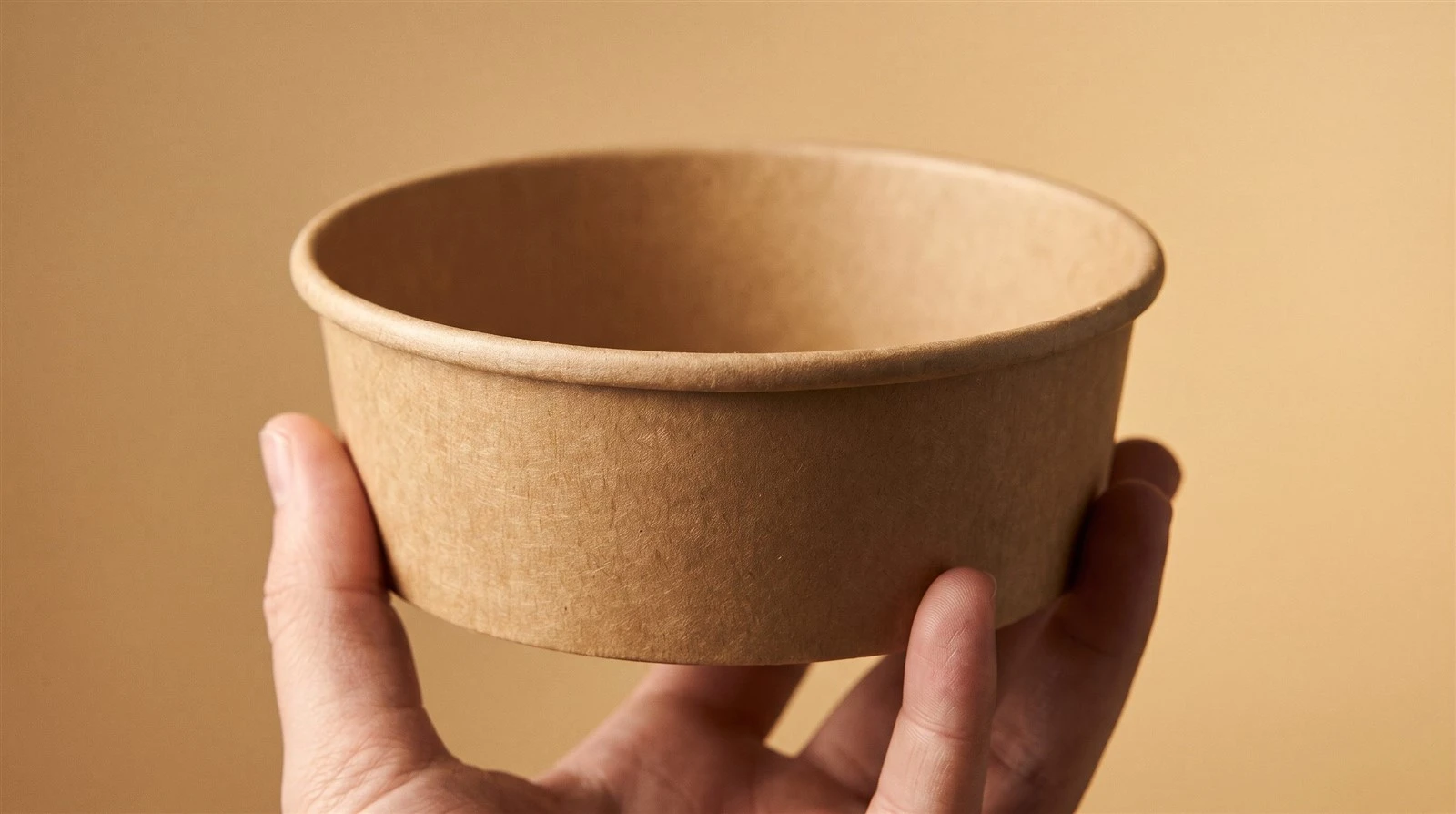
Introduction
You order a rich curry or a steaming bowl of ramen for lunch, get pulled into a meeting, and return an hour later to a lukewarm meal. Before popping that brown takeout container straight into the microwave, one question matters most: are kraft paper bowls microwave safe?
The short answer is yes-most PE-lined and aqueous-coated kraft paper bowls are microwave safe for brief reheating (1–2 minutes at medium power), whereas PLA-lined bowls are not. Whether a kraft paper bowl holds up without warping or leaking depends on its interior barrier lining, the oil and sugar content of your food, and whether you remove the lid.
Understanding Kraft Paper Bowl Linings & Heat Resistance
Uncoated kraft paper absorbs moisture and oil within minutes. To hold hot broth and sauces, every food-grade kraft paper bowl relies on a thin interior barrier-typically 15–20 gsm of coating bonded to 280–350 gsm virgin paperboard. That inner layer sets the bowl's thermal ceiling.
1. PE Lining (Polyethylene)
Polyethylene (PE) is the standard moisture and grease barrier for hot food packaging.
- Heat Resistance: 100°C – 110°C (212°F – 230°F)
- Performance: PE handles boiling-hot soups and broths well during service without softening at the side seams.
- Microwave Caveat: Because PE is a petroleum-based plastic film, prolonged high-power microwaving-especially with oily foods-can soften the polymer and increase the risk of microplastic or additive migration. Keep reheating brief.
2. PLA Bio-Based Coating (Polylactic Acid)
PLA is a plant-derived bioplastic made from fermented corn starch or sugarcane, designed for commercial composting under EN 13432 and AS 4736 standards.
- Heat Resistance: 45°C – 85°C (113°F – 185°F), depending on crystallization.
- Performance: Ideal for cold salads, poke bowls, yogurt, and room-temperature dishes.
- Microwave Caveat: PLA-lined bowls are not recommended for microwave reheating or boiling-hot liquids. Above ~55°C–60°C (131°F–140°F) for standard grades, PLA softens rapidly, causing bowl walls to warp and seams to leak.
3. Water-Based Barrier Coating (Aqueous Coating)
Aqueous dispersion coatings are a next-generation, plastic-free solution using water-based mineral and polymer dispersions.
- Heat Resistance: Up to 100°C – 110°C (212°F – 230°F)
- Performance: Delivers strong grease and liquid resistance while remaining recyclable and compostable in many municipal streams.
- Microwave Caveat: Provides stable thermal performance without a separate plastic film, making it reliable for brief microwave reheating when labeled microwave-safe.
Kraft Paper Bowl Lining Comparison
| Lining Type | Material Origin | Heat Resistance | Microwave Safe? | End-of-Life Profile | Best Food Applications |
|
PE (Polyethylene) |
Fossil-based plastic |
100°C – 110°C (212°F – 230°F) |
Yes (short, medium power) |
Non-compostable; specialized recycling |
Hot soups, noodle broths, stews |
|
PLA (Polylactic Acid) |
Plant-based (corn/sugarcane) |
45°C – 85°C (113°F – 185°F) |
No (warps/leaks) |
Commercially compostable (EN 13432 / AS 4736) |
Salads, poke bowls, cold deli items |
|
Aqueous (Water-Based) |
Plastic-free dispersion |
Up to 100°C – 110°C (212°F – 230°F) |
Yes (short, medium power) |
Recyclable & compostable |
Hot takeout, sauces, eco-conscious menus |
Step-by-Step Precautions for Microwaving a Kraft Paper Bowl
Even when a bowl is rated microwave-safe, microwave ovens heat unevenly. Following disciplined heating habits prevents structural failure.
Control Heating Time and Power Levels
- Use Medium Power (50%–70%): High-wattage blasts (900W–1200W) create localized steam pockets between the paperboard and the lining. Medium power warms food evenly without stressing seam adhesives.
- Limit Cycles to 1–2 Minutes: Heat in 60- to 90-second intervals, stirring soups or curries midway to distribute heat.
- Never Microwave an Empty Bowl: Without food or liquid to absorb energy, residual moisture inside the kraft fibers superheats, scorching the paperboard or blistering the coating.
Watch Out for High-Oil and High-Sugar Foods
Water boils at 100°C (212°F), capping the temperature of broth-based soups. Oils, fats, and concentrated sugars have no 100°C boiling cap and can spike past 150°C – 180°C (302°F – 356°F) in seconds.
- Risky Dishes: Thick coconut curries, chili oil noodles, cheese-heavy pasta, and sweet glazes.
- Why It Matters: Superheated oil droplets can melt through PE or blister aqueous coatings at the contact line, causing pinhole leaks. Transfer very oily or sugary dishes to glass or ceramic before reheating.
Never Leave Lids Sealed: Material Rules for Kraft Bowls With Lids
Microwaving a sealed container traps steam and builds pressure rapidly, warping the rim or popping the lid off. When using Kraft Bowls With Lids, check the lid material first:
- PP Lids (Polypropylene, Resin Code #5): Heat-resistant up to 110°C – 120°C (230°F – 248°F). Set a PP lid loosely on top as a splatter guard, never snapped shut, leaving a vent gap for steam.
- PET Lids (Polyethylene Terephthalate, Resin Code #1): Clear cold lids soften at 60°C – 70°C (140°F – 158°F). Never put PET lids in the microwave-they shrink, warp, and can release chemical odors.
- Kraft Paper Lids: Vented paper lids release steam during transit, not always during active microwaving. Remove paper lids before heating unless explicitly marked microwave-safe, as some use PLA inner linings or unsealed edges that curl.
How to Identify Truly Microwavable Disposable Soup Bowls
Telling a heat-ready container apart from a cold salad tub comes down to three physical indicators.
1. Check the Base Stamp and Certifications
Inspect the bottom embossing or printed icons on the kraft paper bowl:
- Microwave-Safe Icon: Look for the wavy-line microwave symbol with a clear temperature rating (e.g., -20°C to 110°C).
- Coating & Compliance Marks: Quality packaging specifies PE, PLA, or aqueous lining alongside food-contact compliance (FDA 21 CFR or EU 1935/2004). If a bowl is unlabeled or marked "Compostable PLA," keep it out of the microwave.
2. Evaluate Paperboard GSM and Structural Rigidity
Thin paperboard collapses once steam softens the outer fibers. Reliable microwavable disposable soup bowls use heavy-duty virgin wood-pulp kraft paperboard-typically 300 gsm to 350 gsm for 500 ml to 1,000 ml capacities.
- Rigidity Test: Squeeze the side wall of an empty bowl. High-density virgin kraft board feels crisp, sturdy, and rebounds without creasing.
- Odor Check: Virgin kraft pulp with food-grade barriers stays completely odor-free, even with 90°C (194°F) broth. Sharp chemical or glue smells indicate subpar adhesives unsuitable for hot food.
3. Inspect the Rolled Rim and Bottom Seam
Leak resistance during reheating relies on mechanical forming as much as coating chemistry.
- Tightly Rolled Rim: A uniform 3.5 mm – 4.5 mm rolled lip keeps the bowl circular under heat and ensures a snug lid fit.
- Heat-Bonded Base: A clean, recessed bottom ring without exposed paper edges prevents broth from wicking into the cardboard core.
Across the packaging industry, consistent quality control separates dependable hot-food containers from leaky disposables. At Shuntongpack, every batch of kraft paper bowls undergoes standardized testing for virgin pulp gsm consistency, odor neutrality, rolled-rim rigidity, and thermal seal integrity so foodservice teams can serve hot soups and reheat-ready meals reliably.
Frequently Asked Questions (FAQ)
Can I put a kraft paper bowl in a conventional oven or air fryer?
No. PE- and aqueous-coated kraft bowls top out around 110°C (230°F), while ovens and air fryers operate at 160°C – 220°C (320°F – 428°F). Dry radiant heat and circulating hot air will scorch the paper, melt the barrier, and pose a fire hazard.
Will a kraft paper bowl leak if I pour boiling water into it?
A PE- or aqueous-lined bowl holds boiling water (95°C – 100°C / 203°F – 212°F) without leaking. A standard PLA-lined bowl, however, exceeds its 45°C – 85°C (113°F – 185°F) limit and may soften at the seams within minutes.
Is it normal for a kraft paper bowl to smell slightly when heated?
A faint, warm woody-paper scent from unbleached kraft fibers is normal. A plastic, metallic, or chemical odor is not-stop heating immediately, as it signals an overheating PLA/PET component or low-grade adhesive.
Can I microwave a kraft paper bowl straight from the freezer?
Thaw slightly or start at 50% power. Moving a frozen bowl directly from -18°C (0°F) into full-power microwaving creates thermal shock and ice-to-steam pockets that can delaminate the inner seam.
Final Takeaway: The Golden Rules for Safe Reheating
Knowing are kraft paper bowls microwave safe comes down to matching the container to the heat load:
- Verify the lining: Use PE or aqueous-coated bowls for hot liquids and microwaving; keep PLA bowls for cold or room-temperature foods.
- Go low and slow: Heat at medium power for 1–2 minutes, stirring midway.
- Watch oil spikes: Transfer high-fat curries and sugary sauces to glass or ceramic before prolonged heating.
- Vent or remove the lid: Never microwave a sealed bowl, and keep clear PET lids out of the microwave.
For foodservice buyers and teams seeking verified temperature ratings, gsm specs, or thermal leak-test parameters across bowl sizes, explore the full range of Shuntongpack kraft paper bowls to match the right lining and lid pairing to your menu.


